

The Prismwrights
How the PRISM Collective bends code, hardware, and design into interactive art pieces.

Welcome to the Dossier — a series of oral histories highlighting research through transcripts, images, and artifacts.
TDSD is currently running an art-tech showcase of researcher-creatives like the PRISM Collective and actively seeking presenters, patrons, and venue partners. Please get in touch if you’d like to participate or support!
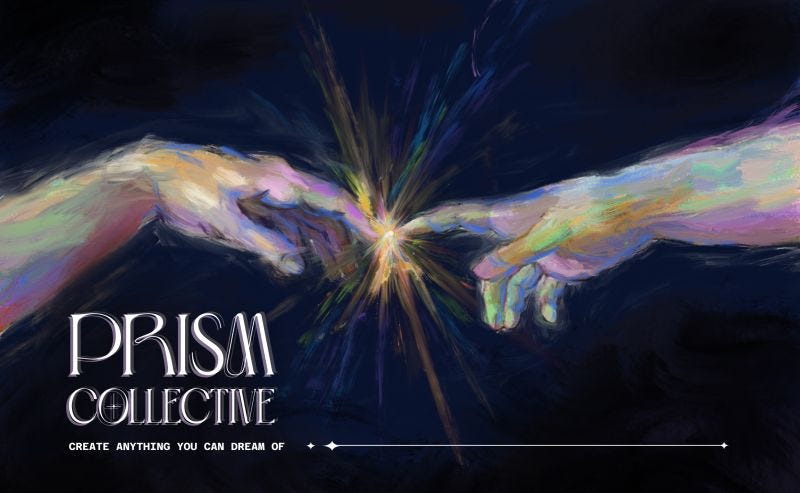
The PRISM Collective at the University of Waterloo is community of engineers, designers, and researchers who make art-tech together — think motion-tracked “waterbending,” bass-playing robots, and kinetic creatures. What began as a bubble-tea-table idea is now a community with open calls, funded projects, and showcases.
In this dossier piece, we sit down with Olivia, Binal and Maisha — 3 of the 4 co-founders of PRISM — and talk about blending art and technology, what the future of creative science looks like, and how we get there.
It’s been a crazy year for research, technology, and art. What has been a priority, or a focus, of running PRISM in 2025?
Olivia: One of the main focuses that we have this year for PRISM is being able to showcase new and futuristic, out of the box, interdisciplinary technologies. Things that most people might not know about yet but could have big consequences for the world and provide new ways of thinking. That was one thing that we really wanted to use our platform to highlight and how we think about selecting projects.
What’s the origin story behind PRISM?
Olivia: Each of us has our own backgrounds and histories with art and tech. For me, I’ve been an artist all my life, so naturally I’ve wanted to integrate those two aspects of my identity.


Another main motivation, however, also came from the feeling that [the University of] Waterloo environment—and the broader tech world—can sometimes foster a kind of tunnel vision. There’s so much focus on efficiency, optimization, and scalability, but much less appreciation or space for something creative. I can understand where that perspective comes from, but I think that way of thinking has some fundamental limitations.
I wanted to create a creative outlet where people could break out of that box—a place where they can question “why not?”, experiment, inspire and be inspired, and just see what happens.
Art tech is a great place for this, since it’s not a combination many people even realized could exist. It breaks disciplinary boundaries, is highly creative, and invites new ways of thinking.
You mentioned some fundamental tensions with “that way” of thinking. Can you give me some of them? What is it that doesn’t align for you?
There are lots of commonalities that I think will resonate with the audience because I’ve seen them from previous [Dossier] articles. I think we need more people who are exploring ideas that might not work out, not just ideas that are safe but not necessarily innovative.
I tend to be an optimist. I think a lot of people [who are afraid to explore] will say they’re realists, but I think they lean pessimist. Because if you never really delve into something and explore that area, you never really know what could happen.
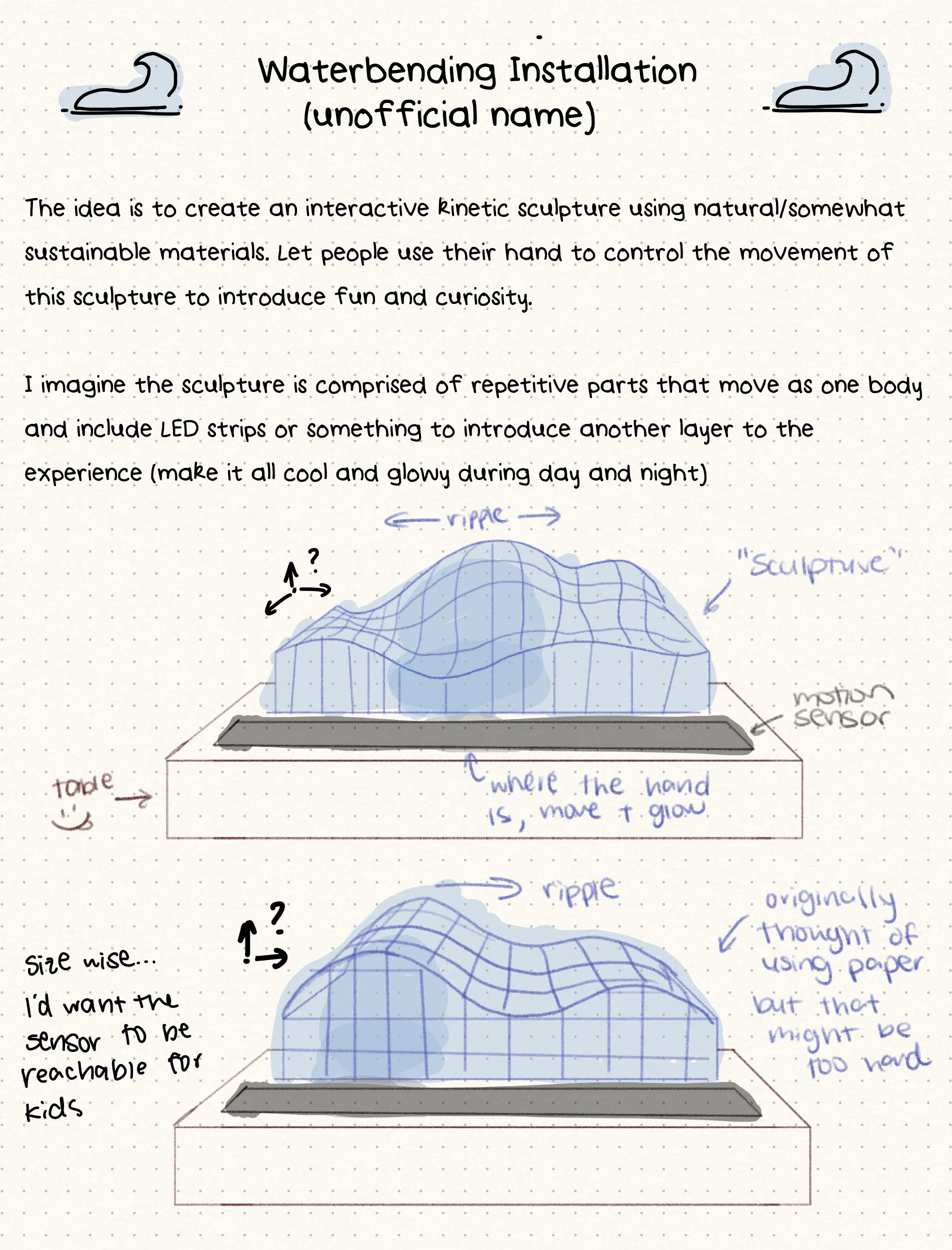
I was looking at the PRISM Notion page before this – one of the works that excited me most was the piece inspired by Avatar: the Last Airbender – which I loved as a kid. The piece simulates waterbending with motion sensors; I think that is an example of how art and technology can tie into like pop culture to become memorable.
Or, as one of my favourite communicators, Lulu Cheng Meservey, would put it, stroking the right cultural erogenous zones [four-way laughter] to draw attention to your mission – in this case, art tech.
How did you imagine PRISM at the beginning, how has that changed, and what has stayed the same?
Maisha: I was always very STEM focused, but I grew up with a lot of friends that went to a film school or did arts - and those are the type of people I always hung around with. So I understood how broad art actually is, and to expect the unexpected.
So from our first meeting to now, I haven’t found anything that’s completely changed from what was originally in my head. Things pivot at any moment. But it’s still art tech. Anything that has an art direction, but expressed with technology, is what I would call PRISM-coded.


Binal: I’ll give you some context first. I used to make art all the time throughout my life, with a lot of different mediums. Then there was a point in one of my co-op [work placement] terms where I was stuck about what I wanted to do, so I took a break from everything. And later, when I was [on exchange] in Europe, I was constantly going to art tech installations, exhibitions whenever I traveled.
They held a spark. This feeling of – ‘hey, there’s a space that exists that combines many worlds.’ And originally I had never thought that someone could actually work in this kind of space.
I came back from Europe and didn’t know what I wanted to do. One idea I had was to make an art tech design team, but it was mostly for an excuse to be able to work on projects I was curious about while still getting a co-op credit [laughs].
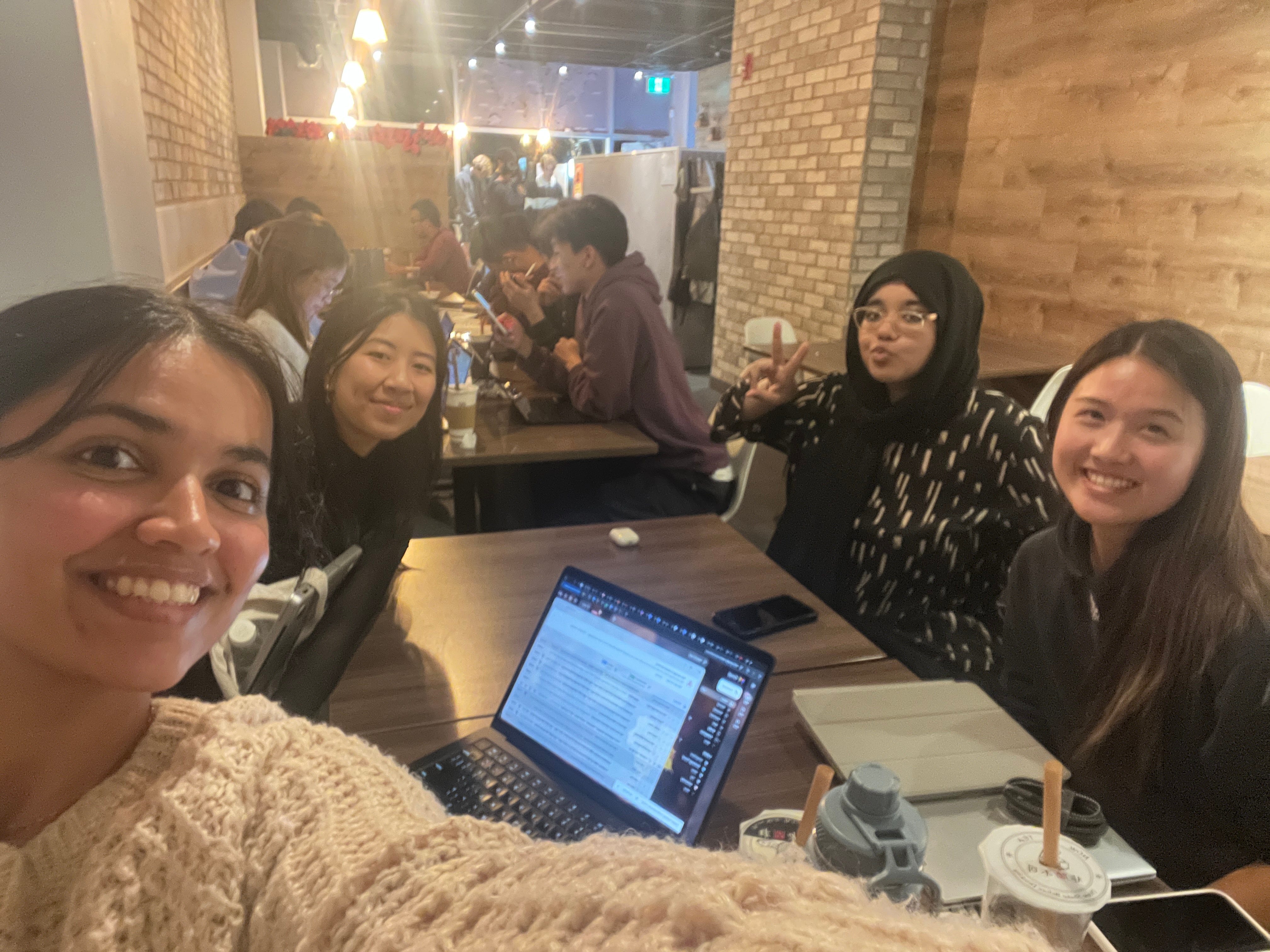
Then one day, we all met up to talk about this idea. That first time we all got together, the four of us, was so special. We all came together at this bubble tea shop (because that’s where you have to go in Waterloo.) That’s where the spark first happened, where the collaborative part began, which is what makes PRISM unique to this day.
Every art tech project you create is part of your identity. It gets represented in concept, or through the medium. When you bring multiple people’s identities together, it’s bound to create something that doesn’t yet exist.
We’ve really tapped into a diverse audience and diverse collaborators. It’s created a lot of cool projects, where people will learn novel skills and collaborate with talented people across different programs on campus, not just the ones cooped up in the same glass engineering building.
For example, I remember one of our members, an interaction design and business student, with no electronics background, decided to create an electronics projects by learning on the spot.
She started by asking simple questions on our Discord channel like, “how do you make a LED circuit?” Within minutes, random people were willing to jump in with detailed paragraphs full of instructions and advice. Even if they couldn’t help in person, they wanted to support from afar.
She learned to solder hundreds of LEDs and built a phenomenal project - without any prior experience. That’s exactly the kind of space PRISM is meant to create.
When you started branching out to recruit members, what was the general reception that you got?
Olivia: We were surprised at how well our idea and the collective was received and how things took off.
In the beginning we were very heads-down, focused on building prototypes so that people could get a visual of what art tech could look like.
We didn’t know exactly how we wanted to structure things either. There were a lot of things we didn’t know.
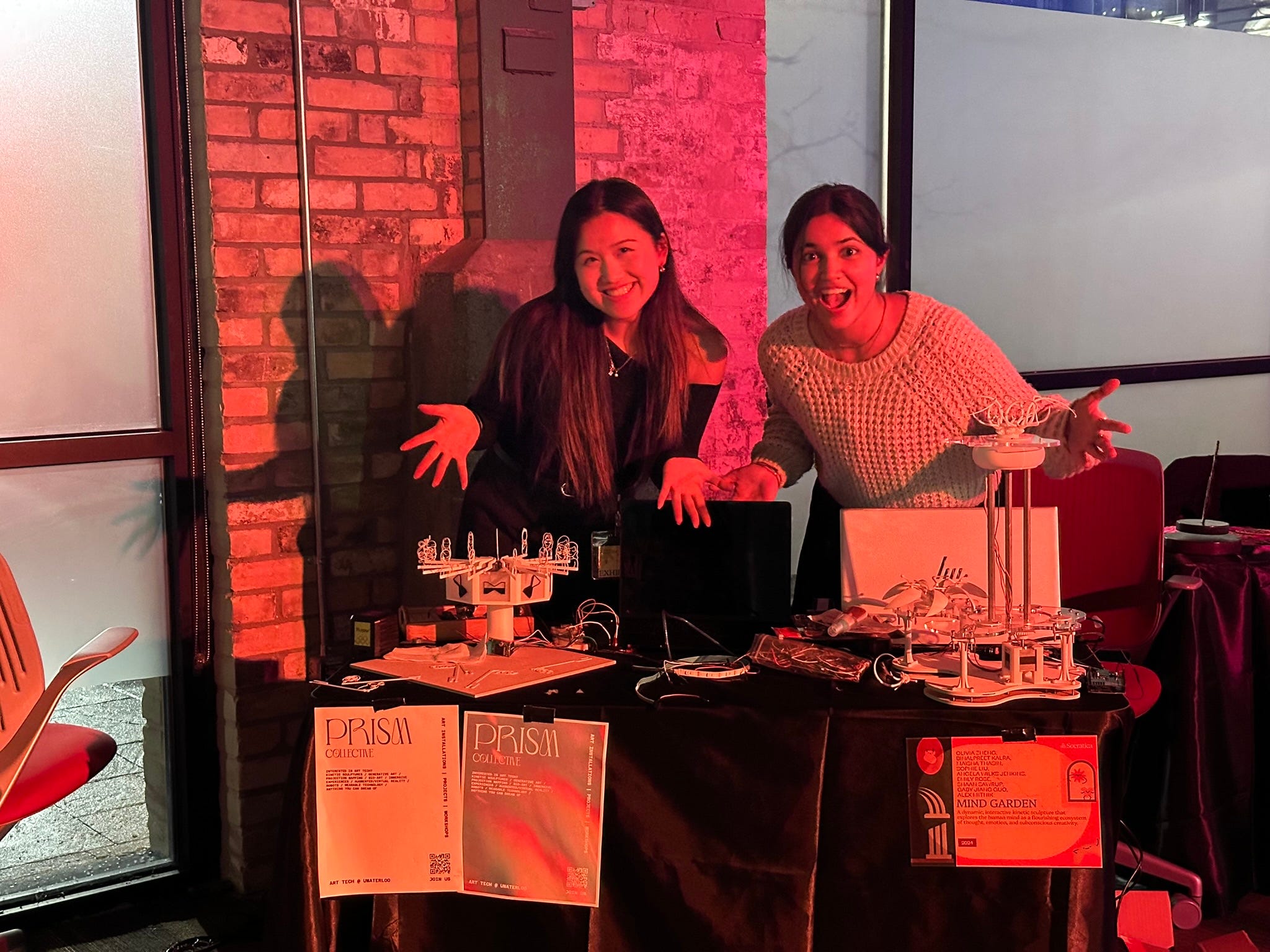
One day, we decided to put up posters around one of our engineering buildings and one of the math buildings as well. It was just 2 buildings, but over the course of one week we had over 300 people join our Discord.
It showed us how many people wanted this space to exist. People want a creative outlet, they want to be able to work on ideas that are unique and creative and beautiful.
Do you think that something like this would be possible outside of Waterloo? What would it take to grow this outside of campus?
Maisha: We have spread a bit – Binal, when she was in Montreal, did a little workshop where we bought some materials and she did an art tech pop-up with a couple of people.
The biggest constraint with art tech is you need materials. Right now, we’re really focused on Waterloo and making it as interdisciplinary as possible.
Olivia: Especially with the new kind of research and tech exploration approach that we’re taking, the opportunity to collaborate with other research and tech groups would be cool to explore.
This year we actually also started partnering with other organizations of similar values: Conflux, which is Harvard’s Art Tech collective, the Augmentation Lab, and Ekkolapto.
An aside, but traditional researchers have a lot of the same constraints that you might experience with like art tech. If you’re a biology researcher, your biggest bottleneck stopping you from going independent is probably access to a lab space and money. But it’s always fascinating how people – like students – who would seem to be the most resource constrained always pull through.
Tell me – what’s behind the name PRISM? I think there’s a deliberate reason you call yourselves the PRISM Collective, what’s the story here?
Binal: Sophie, our fourth member, was the visionary behind this name. To be honest, it sounded cool. So we stuck with PRISM and it stands for something. It really does. I just… can’t remember… do you guys know?
Olivia: [laughs] Projects in Interactive Systems in Media.
Binal: Oh, okay – so we do know what it is actually!
The ‘collective’ part is about building tech together, the collaborative element. We’re making collaborative projects. That was the entire idea. Even behind the Montreal popup event, it was this popup playdate where we brought 12 strangers together in my apartment and no one knew each other, the point was to create an art tech project together in six hours and make it work.
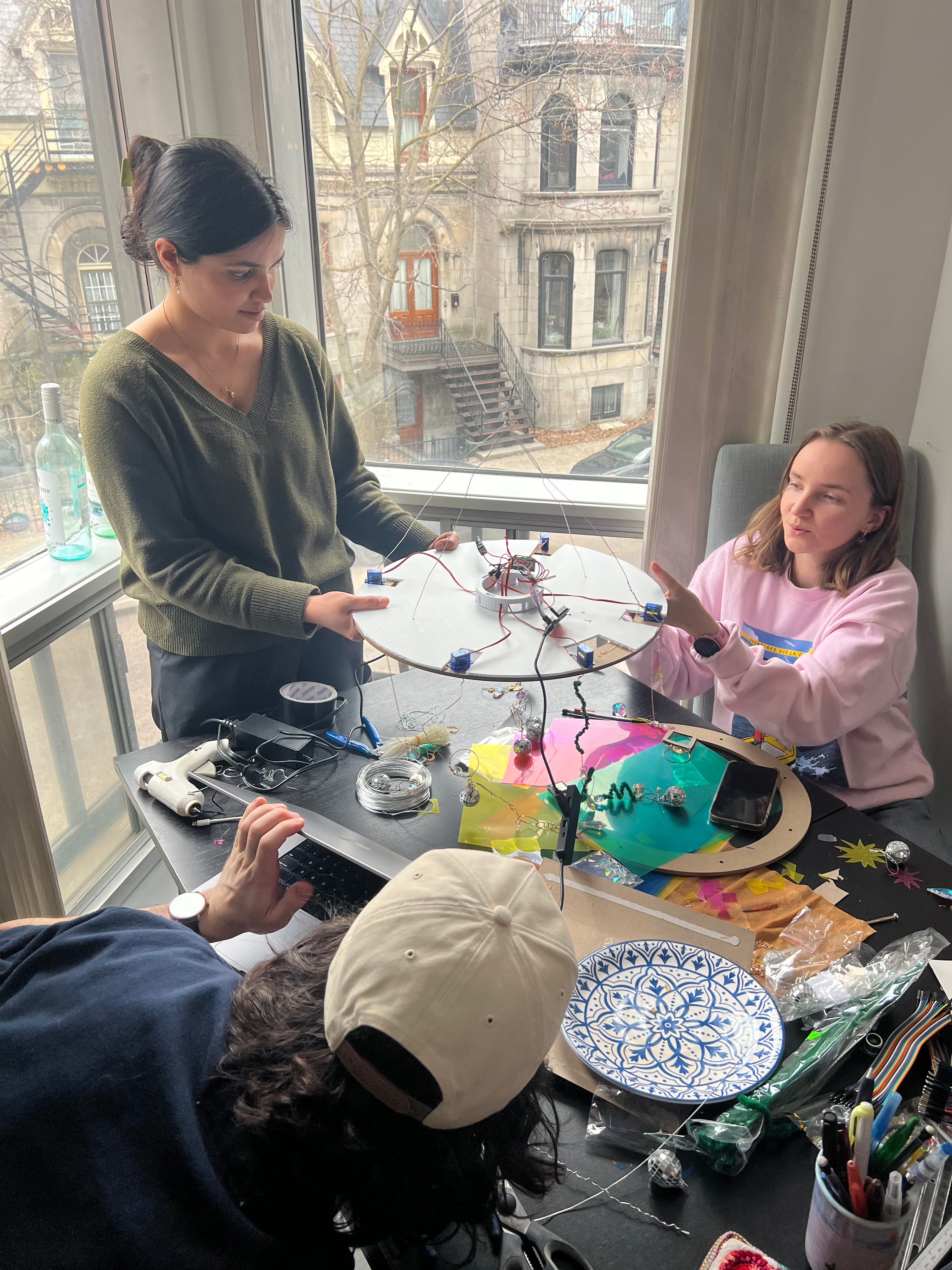
It was very scrappy. But the best part about it was everyone worked together. Everyone tried different disciplines in one dining room.
It’s also a community in the sense that we’re very beginner focused. We’ve all experienced times where we’ve been shut down, or someone’s been condescending to us, disproportionately in STEM related roles. We don’t have that around here. We’ll try things together, ask ChatGPT if we don’t know the answer, we’ll figure it out as we go.
What does the process look like for someone who’s like coming into PRISM, and how do you select projects?
Binal: Back in the winter, we tried having people propose their own projects without requiring previous experience. It was more -- what’s your idea, what’s your big dream? And give us a little plan of how you want this to come to life.
We selected about 10 projects, we supported them financially, and held coworking sessions, some demo nights.
Each person had complete ownership over their project. At the very end, we hosted a showcase, a platform to also share their work.


Maisha: I also want to add - one of the main motivating factors behind this particular structure is that we wanted to give people creative autonomy, which is not something that you can do elsewhere.
Has anyone come in with a developed idea, or does everyone start with a completely new, blank slate?
Binal: It’s really case by case. Some people have dabbled in the research or the technology that they want to work in, for others it’s completely new.
You get a large diversity of people and ideas. When it comes to selecting projects and people, what is your compass? Obviously, it’s a tough choice, and with art it’s hard to assign criteria, but what is your mental calculus?
Binal: one of the criteria we looked at this year was simply “does this qualify as an art-tech project?” Sometimes people have a tech-focused project, but they don’t have a design concept.
We got a couple ideas where people just wanted to use the opportunity as a funding for their independent projects, which we refused. You’re right, it’s hard to set criteria for what qualifies as art tech or not.
Even just explaining what art tech is to other people is very difficult.
Going forward, we want to run longer term, higher quality projects that would be polished enough to send to exhibitions or put on display within the campus. We’re looking to create projects that integrate scientific research to bridge even more interdisciplinary gaps, and find ways to showcase fascinating findings in a way the public can learn from.
Oh — one of the main criteria is the idea of urgency. We’ll ask ourselves: why are we choosing this topic now? What are the most urgent conversations that people are having about things that are happening in the world right now and how can we mobilize the research to make something interesting to learn from or look at?
Olivia: One of my main criteria is also how interdisciplinary and unconventional that kind of research is. Something that, when you expose it to the rest of the world, it will inspire them, the mix of something they didn’t think was possible.
Maisha: As I’m in math, doing things with my hands is very new to me so when I start a project the goal is always to make something where i can learn the most and also build something unique. That’s my personal goal every time I go into a project. “How much can I learn in this given timeframe with this project?”
I have a couple of rapid-fire questions – 1-2 sentences max.
First one. If you had no constraints, what project you would run?
Binal: I would love to make a cool [physical] environment. Transforming a room, making an experience with electronics and mesmerizing sound escapes, that would be awesome.
Maisha: I want to make a crazy fashion piece, with electronics and 3D printing.
Olivia?
Olivia: I have so many…
Rapid fire, rapid fire. Don’t overthink it.
Olivia: I’d want to work with neurocomputers and see if I can work with neurons to make art that can be displayed on a huge wall.
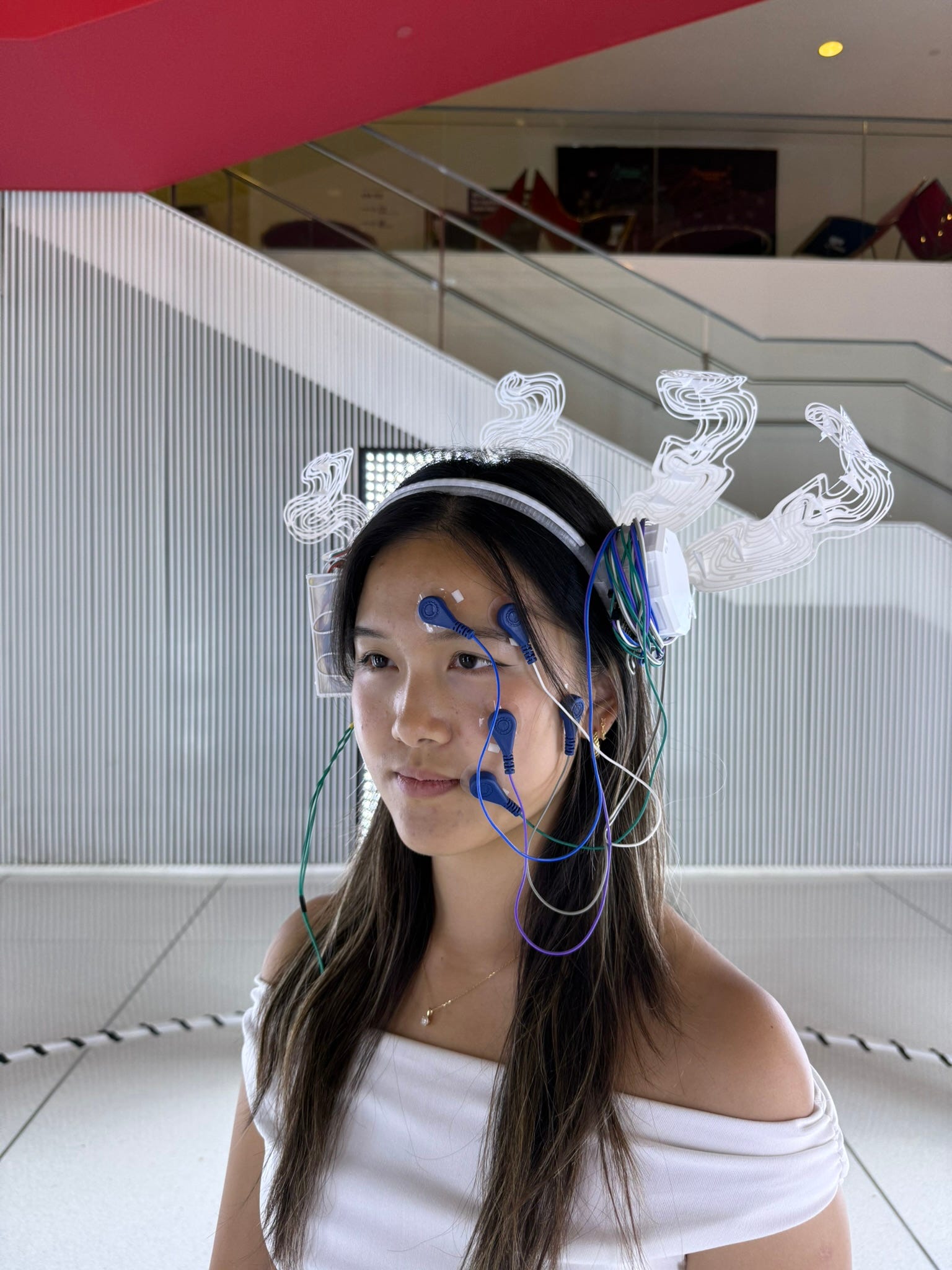
What is one project or person that’s changed what you thought was possible with art and technology?
Maisha: Six months ago I started reading the biography of Leonardo da Vinci and it completely changed the way I think. His way of thinking captures the essence of an inventor’s mindset, It’s so interdisciplinary and so curious about the world. He’s the one who made me realize how inseparable art and engineering really are, and how powerful it is when they come together.
Binal: There were a lot of cool installations that completely changed my mind when I was in Europe. But the one that stands out to me were some displays at the Red Cross Museum in Geneva.
I didn’t expect much from it because it was completely empty. There weren’t many people there. But it ended up being one of the best experiences I’ve had in my life.
One piece had a bunch of radios hanging from the ceiling. And once you stepped right underneath that radio, it turned on. But it was unique to your spot; nobody else could hear what you could hear. Through the voice actor telling the story and the relevant music genres playing, I felt entirely transported to that time.
That was when I really thought: I want someone else to experience what I’m experiencing. I want them to feel this way when they look at my art. That’s the goal I have for the future.
Olivia: For me, there’s not really one place, it’s many. Places like Conflux and the Augmentation Lab in Boston, the Media Lab, little things that build over time and inspire you.
All of you dabble in all sorts of interests, you all mix science, engineering, art. Do you think that the specialist is dead? Who is the kind of person who enters this world of art-tech and succeeds?
Olivia: I don’t think art tech requires a very specific skillset. It requires a specific mindset.
It’s about whoever wants to commit themselves to that space. If you look at a lot of artists, pure artists, you’d be surprised how technical their work is.


I’ve seen people with pure art backgrounds who are working on mechanical sculptures, with motors, and actuating those sculptures. They’re doing the same thing engineering students do. The difference, I suppose, is their desire to keep on working in this creative space, and a deep awareness for how people will experience and interact with their work.
Maisha: The people who join us -- sure they chose their degree [at the University of Waterloo], probably engineering, but that doesn’t mean they’re just engineers.
In fact, if you put them in any kind of scenario, any kind of degree, they would probably also be good at that. Because they’re very curious about the world and everything has something to teach them..
I do think this type of person is going to become more common, especially in the age of AI. All that to say, I think people that will come to PRISM are mostly generalists and that’s where they want to thrive.
Binal: To me, art tech isn’t necessarily a new thing. There are art tech studios that have existed for decades. The only difference might be how they do their engineering and how they want people to interact with their work.
We’re all artists. 100 years ago we were artists, now we’re still artists, we just have different paintbrushes and more paintbrushes to choose from.
These days, we have more people with the courage to wonder, “what if this could exist?” or “what if we could combine these — and what could that create?”
Dropping bars. If someone’s reading this piece and they’re outside of Waterloo, how can they best support PRISM, your mission?
Olivia: I really want to say money – lots of it [laughs], but I’d say platforms, something that we can share our vision and this mindset on.
Binal: We’ve supported 10 projects so far and are developing a few larger, longer-term ones.
Having more opportunities and platforms to showcase the talented collaborations happening behind these projects — and bring them the visibility they deserve — would be incredible.
Second to last question is from the last guest. His question is: do you feel like this is your life’s work? We’re all still very young, so this is a big one.
Olivia: I don’t think I’m going to have just one “life’s work.” That’s my motto. I want to explore.
Maisha: I think this is one of my “life’s works.” This is one of those milestones I’ll remember for the rest of my life.
Binal: I think PRISM is part of it. Is creative tech and art tech my life’s work? I think for now, it’s one of the things that feel most like me. No matter what season of life I’m in, I know I’ll keep coming back to finding new ways to blend my creative and technical sides.
We have this tradition where we brainstorm a question to leave to the next guest, another creative researcher. What’s something that you would want to ask them?
Binal: What would you say is the sparkle in the work you do? Or how do you suggest someone find that sparkle in their work?
Last question. If you could bottle the feeling of PRISM, working together, making friends, seeing these projects come to life, in a one word answer, what would that word be?
Olivia: I’m going to say (steal) whimsy.
Binal: I was about to say that! [laughs] Okay, I’m going to say collective. I like collective.
Maisha: I’ll say interdisciplinary.
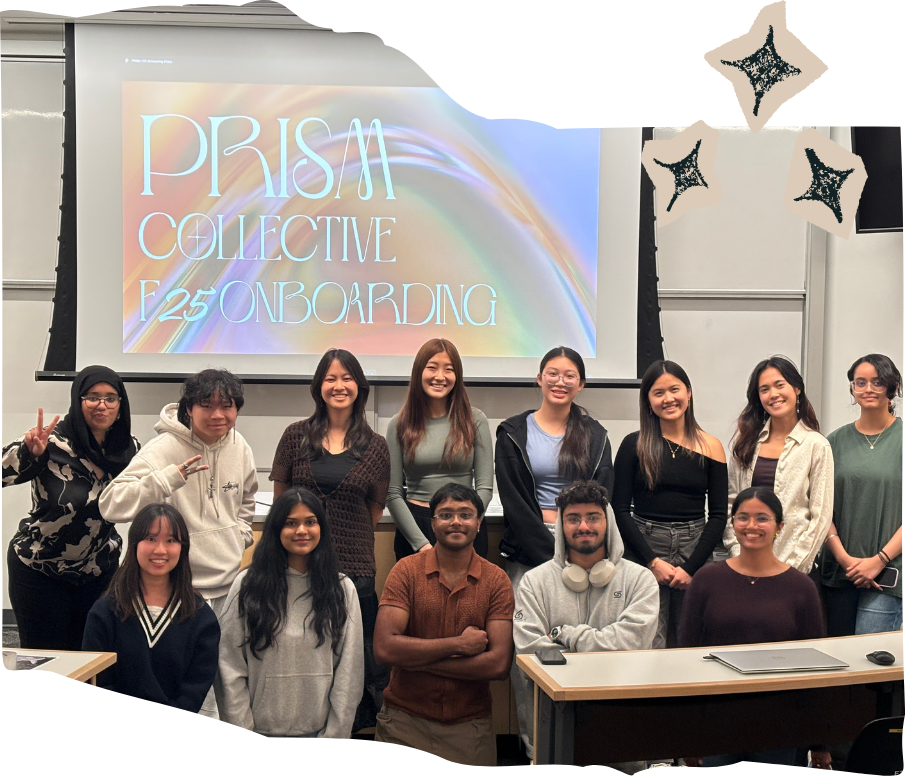
Everyone, this is PRISM.
Olivia: Thank you, Distressed Scientists!
This is a great read! My first of yours and can’t wait to explore more.
This is so cute we love to see our friends succeed