


Robots will change us in small ways long before they change the world.
Before algorithms, there are relationships. That is Shahvir’s founding philosophy. From desk-sized companions to room-aware behaviors, he builds for the shared edge where human needs and machine capabilities meet. We talk about scale and setting, the line between man and machine, the etiquette of cohabiting with technology, and rules for a robot roommate.
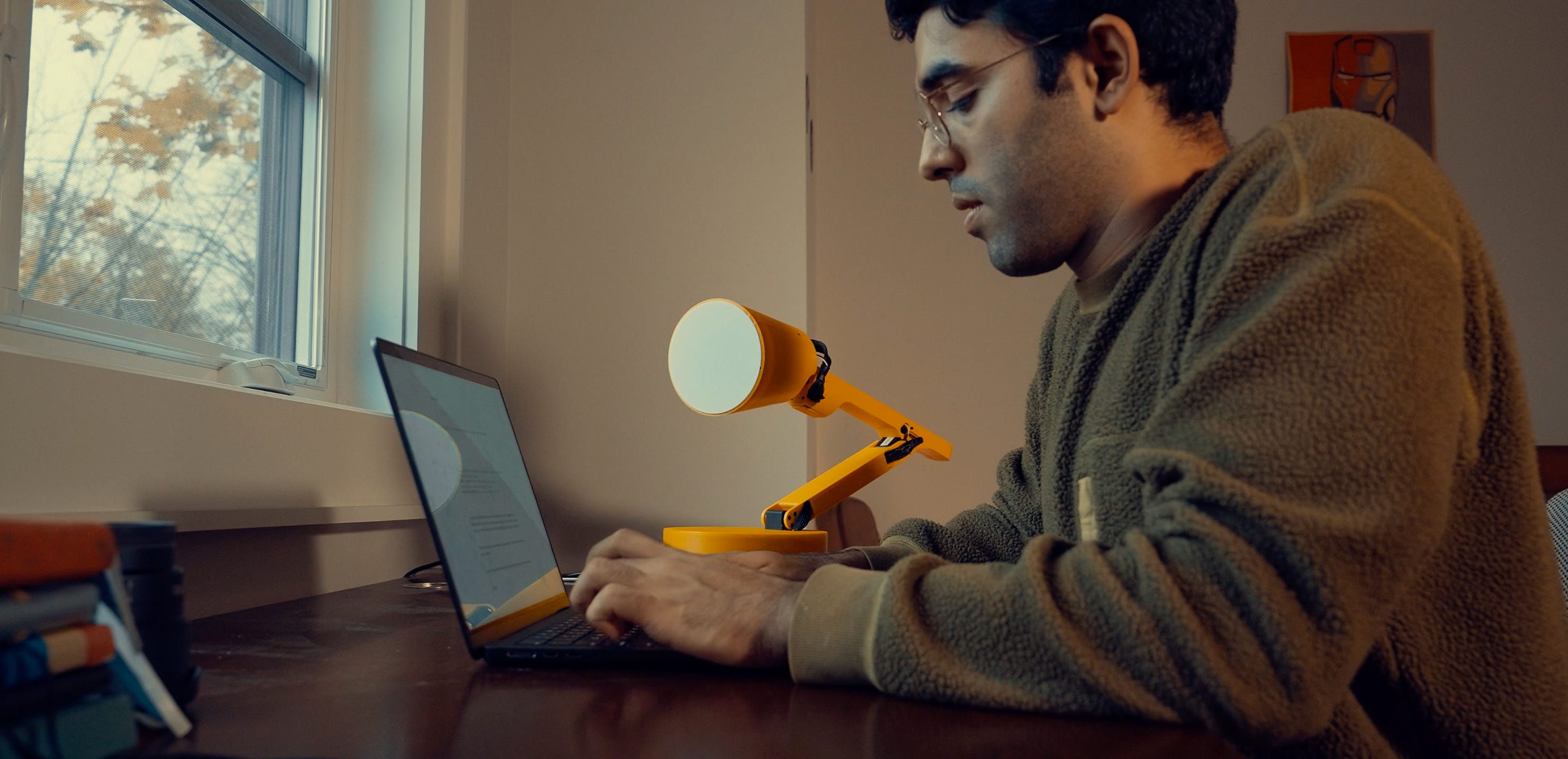
One of the things you’ve written about is that inspiration without execution is a trapped idea; that execution without vision is a soulless craft. When did you start to feel that way, and how do you resolve this in your craft?
The binary of inspiration without execution is a void. Things can go in and out of your brain, so easily. Talking is so easy. But when you make things, an artifact, you’re forced to converge on something — only then does substance arise.
And inspiration is great to consume, but people tend to consume a lot — very few people are generative. My strength is more on the vision side and inspiration. But if you don’t materialize it, it just goes away and someone else does it. That’s one part.
Execution on the other hand without inspiration is just shooting in the dark. It’s not joyful. It’s not thoughtful. And that doesn’t last.
One of our investors [in Human Computer Lab] says it well: “Your hands should be on the stars, and your feet should be on the ground”. I’ve always really liked that line.
How is that expressed in your art?
In the beginning there’s always experimentation and you have to make a lot of things. And that comes through execution, but you run out of things to make if you don’t have a source of inspiration.
For example, right now we’re working on a lamp. There’s so much history about lightbulbs and kerosene lamps that has been compressed in the last 200 years. That source is so important to come up with ideas and then experiment.
The other reason for lamps comes from a few questions, like: what role does light play in our life? What habits are associated with light? Everyone sleeps at night, and everyone wakes up in the morning. Light does that for you. But now there’s this artificial form that you turn on and people have habits around it.
That’s another source to seek inspiration from and then execute. You should always search for that source.
You’ve experienced art and life in India, in Canada, in the US: what do you think each place taught you about how you see creativity?
Most of my creative influence comes from the shows I watched as a kid (especially Dragon Ball Z) and school — all these factors combine and aggregate.
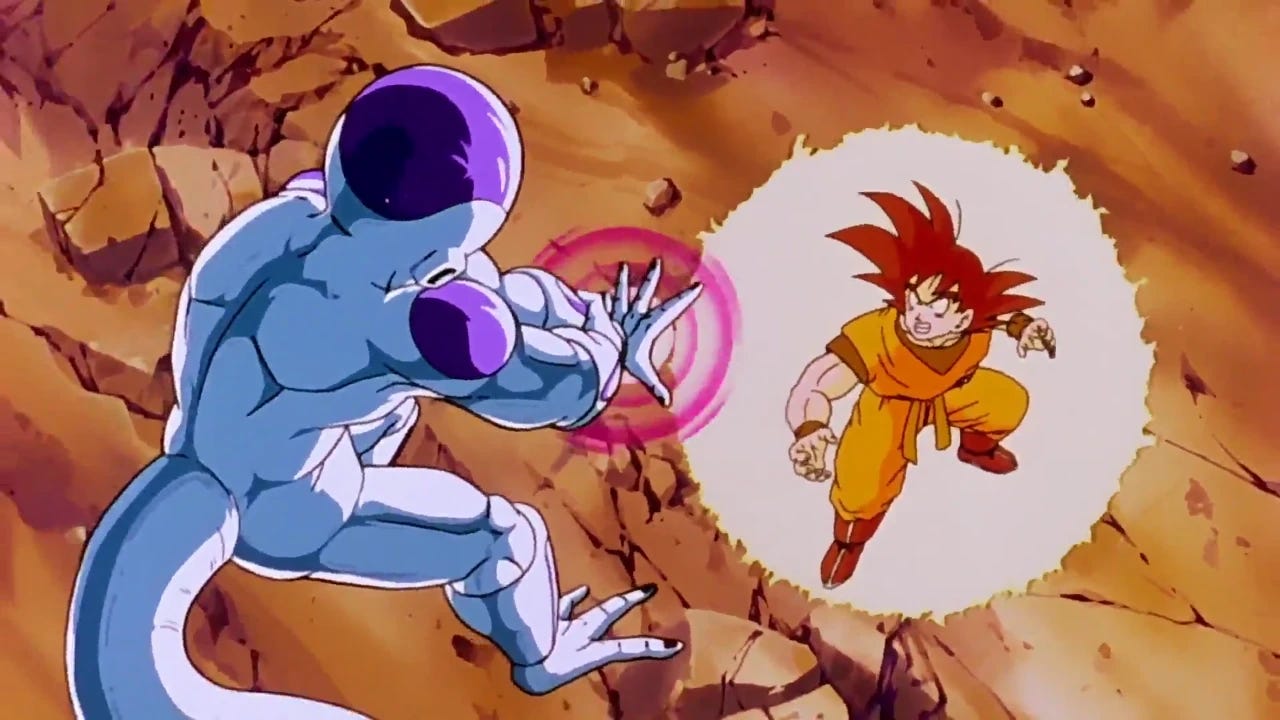
But these ideas come from either conversations, books I read, or just seeing things online.
When I read books from physics or material science—what helps me understand the text better is making something of it. And that puts me in a rabbithole and then I have to force myself to go deeper as a form of creating something of that knowledge.
Inspiration for the art I make is sporadic. I remember I was talking to someone who just had done YC, and he said the team really pushes founders in those three months to just take shots on goal.
Above: Shahvir’s oscillating art artefact - you can play with it yourself here.
What does it mean to take shots on goal? It means to cover as much surface area while hitting different walls as fast as possible and find the thing you want to work on. And once you find the gap you can really take off with escape velocity.
You used to work at Tesla, as well as other companies. How is the Human Computer Lab unique and how does it give you the freedom and flexibility to explore?
Yeah, I don’t think I’m a good employee [laughs]. I get work done but then I get bored, and then I ask too many questions which gets frustrating for some people I worked with in larger teams. [laughs]
So why Human Computer Lab? Before this I was thinking of starting a fund, to back people in design or deep tech who are doing creative hard things. I had this thesis that software’s gone easy.
The smartest people always go to the hardest problems. If you see physics there’s photonics, quantum, all these fields exist because a lot of brains transfer there to solve hard problems. So I thought, okay, there’s a subset of smart people that are not just theoretical or research oriented. They still wanna do cool things, but they’re going to hardware, ‘cause software’s gone so easy.
I was in rooms where a lot of my friends were engineers and I was the only designer they knew. So they would always ask “Shahvir, can you make our website or interface or brand?” I was already helping people just because I enjoy the craft. And one day I just asked if I could invest in them. Most of them said yes. They offered to give me a discount, let me angel invest. So I really did explore this path.
Then I was building a thesis of what I actually wanted to see in the world. I didn’t want to be a design investor. I didn’t want to just be a deep tech VC because I’m not an aeronautics engineer who can just invest in rocket companies (or whatever that might be).
I felt human computer interaction was interesting because the underlying technology is way better than the implementation today. You should read our manifesto on this. With AI coding the same was true where Copilot, for example, couldn’t do half of the things it was asked to do for engineers. Cursor came and closed that gap. Google does this for search. Search existed for a while, but it was very disparate.
So I started thinking about human interactions after AI surpassed initial expectations. But then the more I went into that path, the more I realized I just wanted to build [not just invest].
So my idea was simple for Human Computer Lab. The idea was to experiment, build a collective and give people money to push the domain of new human computer paradigms.
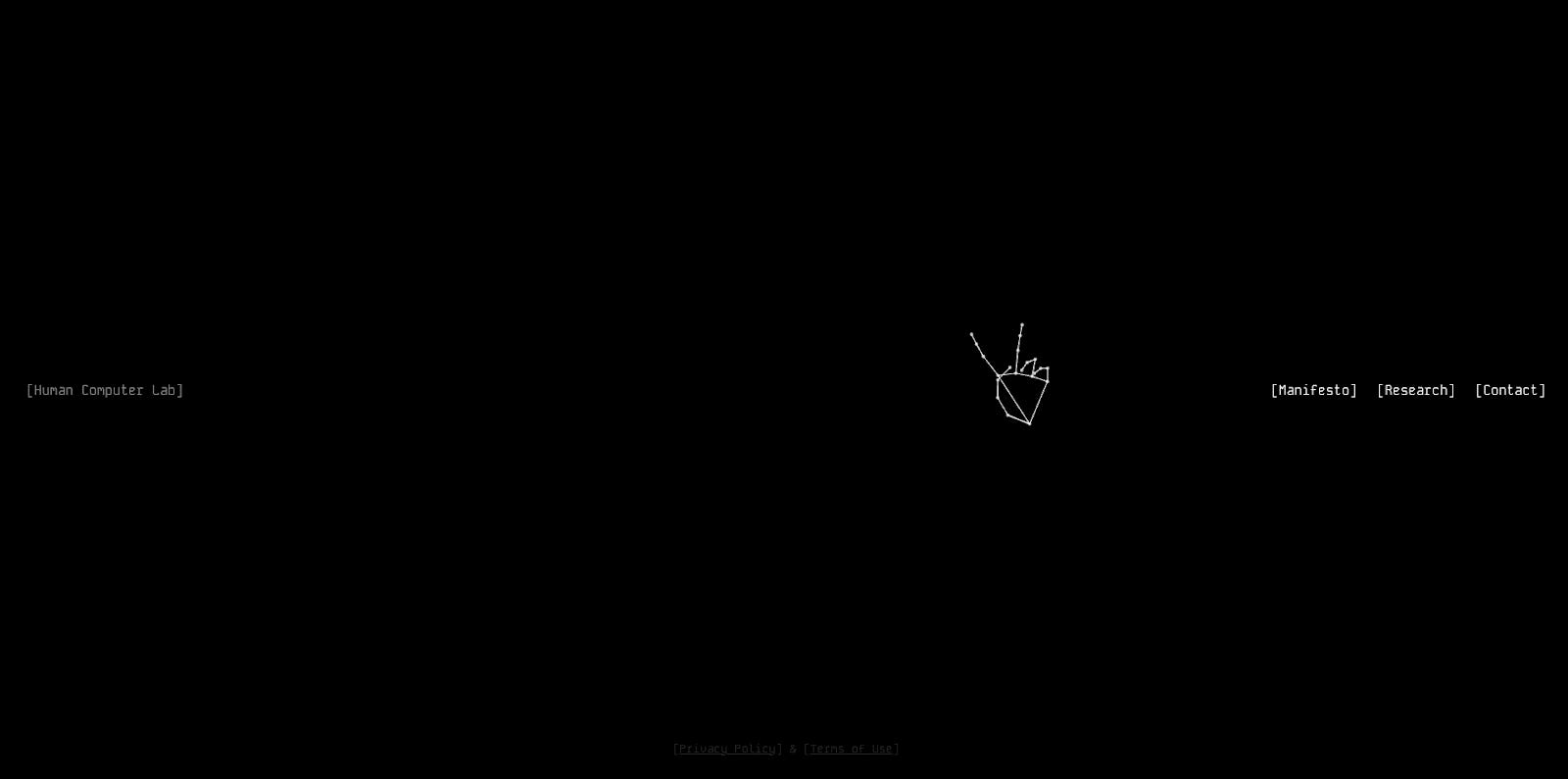
And for what I’m building: we’re going to interact with technology for the rest of our lives. Phones shape our behavior every day.
If you talk to any designer, they’ll say that they’re culture makers. You shape culture in some ways that people overlook. With this company, I want to change our attachment to technology.
But to do that, there needs to be something substantial created, that becomes part of everyone’s life. Otherwise it’s a lost cause and phones win.
We have landed on robots right now, but what type of robots? Five feet tall? Humanoids and hanging on a rig in a home?
I instead see a world where smaller expressive robots are the ones we form these bonds with. It’ll be the case for education, utility and entertainment. That’s the thing that will change how we improve our relationship with technology.
Let’s talk a little bit about the lamp. How did you come up with the name LeLamp? What’s the story behind that?
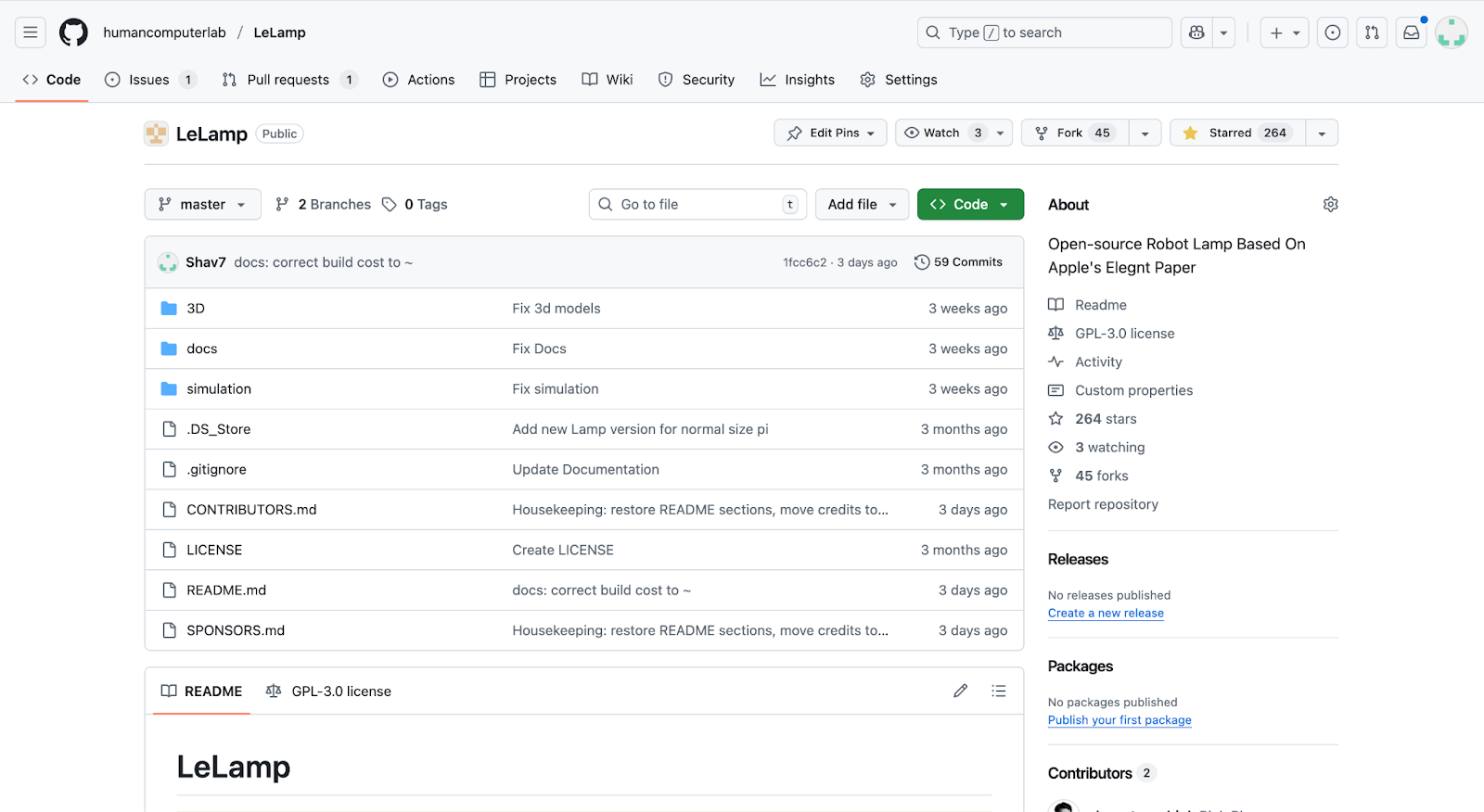
So Hugging Face launched a platform called LeRobot, which is their open source platform to build robots and data collection.
But the very origin of the idea emerged originally from Apple. They released a paper called ELEGNT earlier this year and I felt it was a shift in how we think about robots.
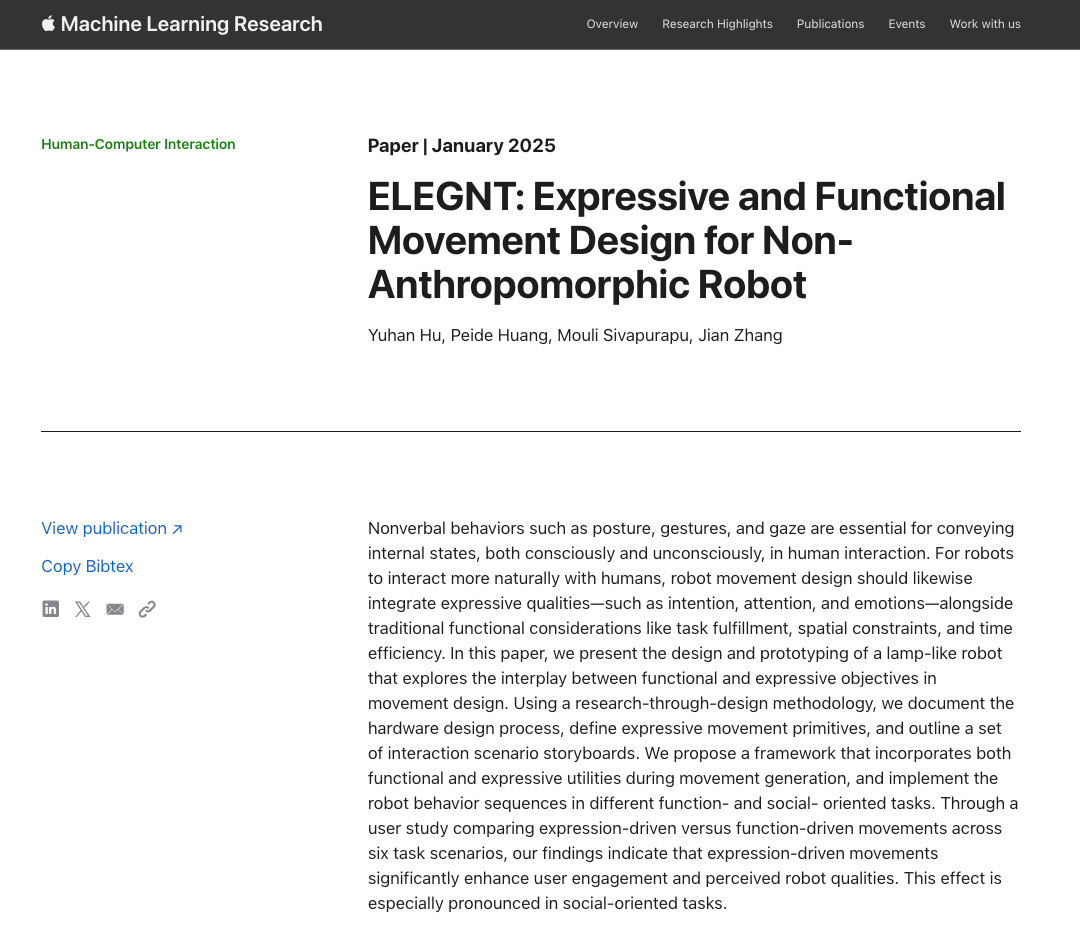
And when we started the company, we built a camera. We worked with some other companies on robot interfaces. But LeLamp was one of the ideas and I knew this was going to be big.
The first week we launched building on top of hugging face’s LeRobot repository and the So100 arm. We called it LeLamp in tribute.
Now, it’s also open source. There was no open source robot lamp before us, we were the first ones to do it.
Can you speak more on the decision behind not going for a camera or a desk or some other object that people often interact with?
I think the bar for interactive robots is low in homes. I mean, we have robot vacuum cleaners, but soon there’ll be smart robots in everyone’s homes in some way or another.
What else will you have in your home? I think it’ll be something that you love, because bringing something home is very special. We curate our homes, we care about them, they’re distinct. That’s where I think a new surface area is emerging.
People are generally more open to humanoid robots than robots that take up less human forms. What do you think is the most effective form for people to accept?
For me, the humanoid argument is very simple. In 10 years, let’s say you take your kid to a robot store, right? And you want to buy them a robot, would you buy your 5-year-old or your 4-year-old a humanoid?
Probably not.
Yeah, why? Because it’s four feet tall. It’s big. If it falls, they weigh 60-70 kilograms.
I have friends who work at humanoid companies. Sometimes the robot will just swing their hand and can potentially hit you, and you don’t even know why—it’s a black box. Imagine things break and it swings its hand. It could literally blow someone’s head off.
So there’s all these problems there [with larger robots] but at the same time people love small things. If you look at people’s desks they usually have a few small things that encapsulate their personality.
Lamps are interesting because they have utility. Everyone needs a desk light or lights in their home for when it gets dark, and it’s also simple enough for people to understand. The best form factor is still an open question but I think a lamp is really interesting.
Do you think that there’s any utility or human behavior that machines should never touch?
That’s a good question. My brain goes to safety: if something’s not safe enough, it shouldn’t be used.
I’ll take a simple example of a piece of software: AirBnB. What if people are scamming each other or causing other conflicts? Going into someone else’s home requires a lot of trust, and how AirBnB developed that trust in the early days was to go to people’s homes themselves and take pictures to prove that the homes were high quality.
If trust and baseline safety is not achieved, that technology shouldn’t enter right away. Maybe someone should think through it or through experimentation figure out what that looks like.
A lot of what you’re doing is to envision what the future of human coexistence with robots could look like. When AI first came out, people were starting to build intimate relationships with AI. How do you think humans should approach this relationship to robots?
This is something that Apple did in 1985 first publicly, where they laid out guidelines for how computer interfaces should be designed. There were these sets of rules around defining things like: what’s a window? What’s a cursor? Metaphors from the physical world.
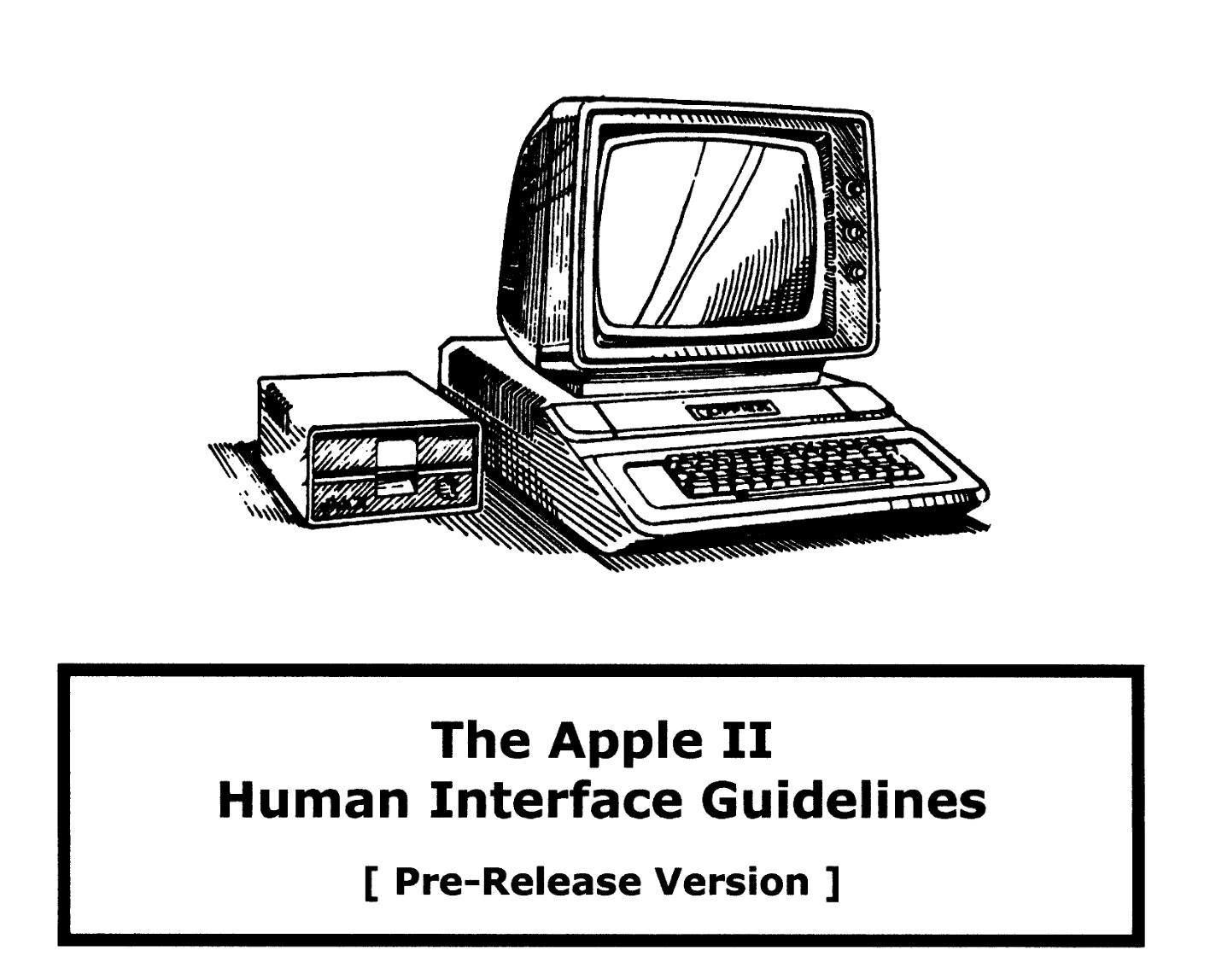
So many small things came together and made these abstractions for computer interaction. What are these rules or the equivalent for human-robot interaction?
Disney has done a great job at thinking about animatronics but I still think we’re so early. And the reason it’s called Human Computer Lab is because we want to define those paradigms, we want to write a manifesto. What are those commandments? What are the guidelines for Human Robot Interaction?
Assume you have a robot as your roommate. What are three rules that they would have to follow?
That’s such a good design question, in the sense that it’s a good source to think from and abstract the ideal human traits into a robot.
It depends how you see it, right? If you see a robot as a laborer, if you see a robot as someone who’s a cleaner, there’s one set of values.

If you see them as a roommate or someone who helps pay rent or splits cleaning duties, then you’ll want that.
I was talking to someone from Japan and he was telling me about how they view robots in Japan. They don’t see robots as laborers.
The way they see it is that every non-living object has embodiment. It has life, I mean, not scientifically speaking, but they treat it with importance. They don’t throw away things just because they get old. They take care of things.
If you start designing a robot for people who think that way, then it’s completely different.
So now the roommate question comes in again. I do see my roommate as being someone who has life and I treat as an equal friend.
I’m still figuring that question out because there’s a distinction right now in the field, at least between people who are building products for entertainment or utility.
What ethical or philosophical stance about exploration, in your life as a scientist, an artist, do you think overarches all of this?
The easy, visceral, human part is that I get bored easily. I get bored so fast that I’m forced to try things differently.
And I’m very intuitive in how I operate. I trust my gut deeply.
But it also can be harmful in some ways when you need to converge on things while balancing the need to push them far enough.
From that I learned you just have to see things through to close the loop on them. You also have to live long enough to win. And once you win you have to keep winning to continue playing the game.
On the philosophical side, every creative person, every great scientist who has created something, they’re very generative.
Any person thinking about or doing this type of work is constantly making things. It might be art, it might be writing, it might be an algorithm or whatever. It might be a research paper. It’s the ability to generate.
You want to protect that. And I’ve also learned with this company, I need to ask myself why am I not being generative enough? Because that’s the biggest strength I have and if something is affecting that then it’s important to take a step back and ask what it is.
The researcher-creative before you wanted to ask: who are the people that you want to bring these technologies to? And why do you feel the need to translate these technologies to people?
This is the core debate of the company. The product we build is an instrument for me to realize the vision of changing how we create attachments to technology.
The other side of it, which I see as a trade off, is that I have limited time on this planet. There are people who are trying to help us expand into the cosmos and doing research in important fields. But while we are on this planet with the technology we have in our life, can I help humanity have a better relationship with it?
Like I’ve said, I’m not a good employee, so if there’s some way I can make something that inspires people or changes how they interact with these devices, in small ways, I think that might result in a net positive change towards the larger mission.
Beautiful. The last thing I’m going to ask you is to leave a question for the next guest.
This might be ironic, and rhetorical, but I believe we have the answers [to most things we’re curious about]. It’s about the questions you ask.
I’d like to ask: what question is that person asking? What answer are they trying to get to?
This is my friend Shahvir — thank you so much for joining us.
Here's to the crazy ones -- thank you, Shahvir!
This article comes at the perfect time. Shahvir's point that inspiration without execution is a trapped idea is so right.